Welcome to the future of smart living, where every device in your home works together seamlessly to simplify your daily routine. Smart plugs have become fundamental to this vision, transforming ordinary appliances into intelligent, remotely controllable devices. But as our home networks evolve, a common question arises: what about 5GHz smart plugs? For years, 2.4GHz has been the standard for most smart home gadgets, but the shift towards faster, less congested 5GHz Wi-Fi bands prompts a closer look at how this technology impacts your smart plug experience. At maypd.com, we’re dedicated to exploring these cutting-edge trends, guiding you through the intricacies of smart home connectivity to ensure your setup is future-proof and optimized for peak performance.
|
Our Picks for the Best Smart Plug in 2026
As an Amazon Associate I earn from qualifying purchases.
|
||
| Num | Product | Action |
|---|---|---|
| 1 | Kasa Smart Plug Ultra Mini 15A, Smart Home Wi-Fi Outlet Works with Alexa, Google Home & IFTTT, No Hub Required, UL Certified, 2.4G WiFi Only, 2 Count (Pack of 1)(EP10P2) , White |

|
| 2 | Amazon Smart Plug - Works with Alexa - Simple setup, endless possibilities |
|
| 3 | Kasa Smart Plug Ultra Mini 15A, Smart Home Wi-Fi Outlet Works with Alexa, Google Home & IFTTT, No Hub Required, UL Certified, 2.4G WiFi Only, 1-Pack(EP10), White |
|
| 4 | Kasa Smart Plug Mini 15A, Smart Home Wi-Fi Outlet Works with Alexa, Google Home & IFTTT, No Hub Required, UL Certified, 2.4G WiFi Only, 4-Pack(EP10P4) , White |
|
| 5 | Kasa Smart Plug HS103P3, Smart Home Wi-Fi Outlet Works with Alexa, Echo, Google Home & IFTTT, No Hub Required, Remote Control,15 Amp,UL Certified, White, 3 Count (Pack of 1) |
|
| 6 | GHome Smart Plug, WiFi Smart Plugs Work with Alexa and Google Home, Smart Outlet Timer with APP Remote Control, 2.4GHz Wi-Fi Only, No Hub Required, ETL FCC Listed |
|
| 7 | Kasa Smart Plug HS103P4, Smart Home Wi-Fi Outlet Works with Alexa, Echo, Google Home & IFTTT, No Hub Required, Remote Control, 15 Amp, UL Certified, 4-Pack, White |
|
| 8 | Sense Energy Monitor - Track Electricity Usage in Real Time and Save Money - Meets Rigorous ETL/Intertek Safety Standards |
|
| 9 | Kasa Matter Smart Plug w/ Energy Monitoring, Compact Design, 15A/1800W Max, Super Easy Setup, Works with Apple Home, Alexa & Google Home, UL Certified, 2.4G Wi-Fi Only, White, KP125M (4-Pack) |
|
| 10 | Kasa Smart Plug HS103P2, Smart Home Wi-Fi Outlet Works with Alexa, Echo, Google Home & IFTTT, No Hub Required, Remote Control,15 Amp,UL Certified, (Pack of 2) White |
|
What Exactly is a Smart Plug and Why are They Indispensable?
At its core, a smart plug is a simple device that plugs into a standard electrical outlet, allowing you to remotely control whatever is plugged into it. Think of it as giving your old lamp, coffee maker, or fan a brain. With a smart plug, you can turn devices on or off from your smartphone, set schedules, and even integrate them with voice assistants like Alexa or Google Assistant.
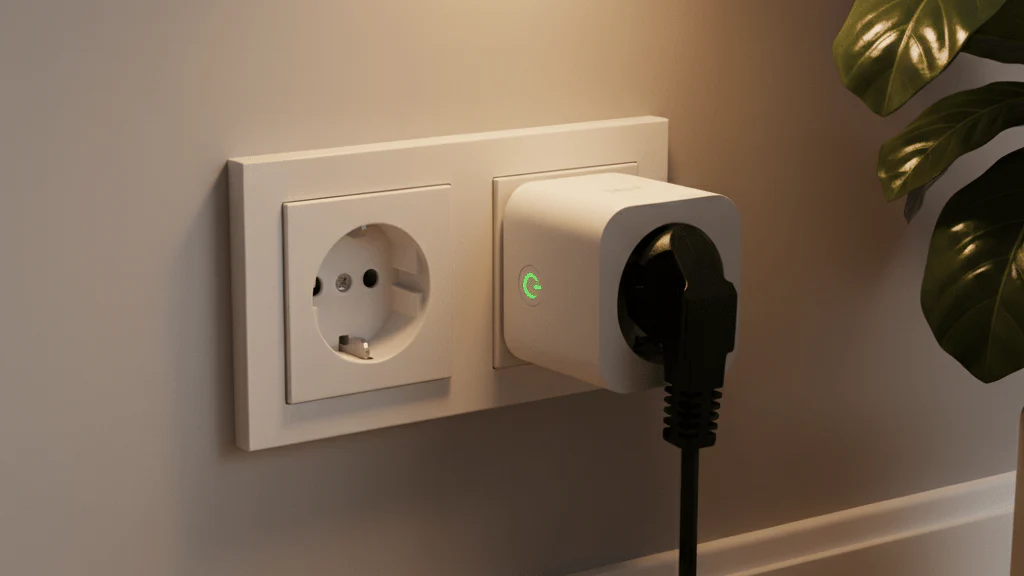
These unassuming gadgets are indispensable for several reasons. They offer unparalleled convenience, allowing you to manage your home electronics from anywhere, whether you’re across the room or across the globe. Beyond convenience, smart plugs play a crucial role in energy management, helping you monitor consumption and reduce standby power, ultimately saving you money on electricity bills. They also enhance home safety by enabling you to turn off forgotten appliances or create “away” lighting schedules to deter potential intruders. In essence, smart plugs are the gateway to a truly automated and efficient household, making your home more responsive to your needs.
The Wi-Fi Frequencies Explained: 2.4GHz vs. 5GHz for Smart Plugs
Understanding the two primary Wi-Fi frequency bands, 2.4GHz and 5GHz, is essential for optimizing your smart home network, especially when it comes to devices like smart plugs. Each band has distinct characteristics that affect performance, range, and interference.
The 2.4GHz band is the veteran of Wi-Fi frequencies. Its main advantages are its wider range and superior ability to penetrate through walls and other obstacles. This makes it ideal for devices that might be located further from your router or in different rooms. For most smart plugs, which only need to send small packets of data (like an on/off command), the speed offered by 2.4GHz is more than sufficient. However, a significant drawback is its susceptibility to interference. Many other household devices, such as microwaves, cordless phones, and Bluetooth devices, also operate on the 2.4GHz band, leading to congestion and potentially slower, less reliable connections. This is precisely why the vast majority of smart plugs on the market today are designed to work exclusively on the 2.4GHz band—it’s cost-effective for manufacturers, and its robust range generally suits the low-bandwidth needs of these devices.
On the other hand, the 5GHz band offers significantly faster speeds and less interference. Because fewer devices typically operate on this frequency, it provides a cleaner, more stable connection for high-bandwidth activities like streaming 4K video or online gaming. The trade-off, however, is its shorter range and poorer penetration through solid objects. A 5GHz signal might struggle to reach a smart plug in another room or on a different floor. For devices like smart plugs, the increased speed of 5GHz usually isn’t a performance necessity, as their data requirements are minimal. The distinction between these two bands matters because an increasing number of modern routers combine both frequencies under a single network name, which can sometimes confuse 2.4GHz-only smart devices during setup.
“Optimizing your smart home network means strategically assigning devices to the correct Wi-Fi band,” advises Dr. Anya Sharma, a leading expert in smart home networking. “While 5GHz offers speed, for smart plugs, reliability and range are often paramount. A robust 2.4GHz connection is usually more effective than a weak 5GHz one.”
Navigating the Market: Are True 5GHz Smart Plugs Common?
The reality of the smart plug market is that while dual-band routers are increasingly common, true 5GHz smart plugs are still a niche offering. Most smart home devices, including the vast majority of smart plugs, are designed to operate solely on the 2.4GHz Wi-Fi band. This design choice is primarily driven by cost-effectiveness for manufacturers and the inherent characteristics of the 2.4GHz frequency, which, as discussed, provides better range and wall penetration—qualities that are often more beneficial for small, low-data-rate smart devices spread throughout a home.
However, the market is slowly evolving, and you can find a limited selection of smart plugs that support both 2.4GHz and 5GHz bands. These “dual-band smart plugs” aim to offer more flexibility and potentially alleviate some of the common connectivity headaches associated with mixed network environments. Brands like Eightree, GHome, and Broadlink have introduced models that claim 5GHz compatibility, though often with caveats. For instance, some Broadlink models might be limited to older 802.11b/g/n 5GHz standards, requiring your router to be backward compatible. The Eightree smart plug, frequently highlighted in recent reviews, is noted for its true dual-band connectivity, offering users the choice of either frequency for a more stable connection, especially in congested 2.4GHz environments.
It’s important to manage expectations: even with 5GHz-capable smart plugs, the benefits in terms of pure performance for a basic on/off function are minimal. The primary advantage lies in potentially reducing interference in heavily saturated 2.4GHz environments or providing a viable connection option if your router primarily prioritizes 5GHz for other devices. For maypd.com, understanding this market landscape is key to advising users on making informed purchasing decisions that align with their network setup and smart home goals.
How Dual-Band Smart Plugs Work and What You Need for Setup
Dual-band smart plugs are designed to communicate over both the 2.4GHz and 5GHz Wi-Fi frequencies, offering increased flexibility and potentially more stable connections compared to their 2.4GHz-only counterparts. When you have a dual-band router, it broadcasts signals on both frequencies, often under a single network name (SSID). A dual-band smart plug can detect and connect to either of these bands. The “intelligence” of these plugs, combined with your router’s capabilities, usually aims to establish the most suitable connection.
To get started with a dual-band 5GHz smart plug, you’ll typically need a few essentials:
- A Dual-Band Wi-Fi Router: This is fundamental. Your router must be capable of broadcasting both 2.4GHz and 5GHz signals. Most modern routers offer this capability.
- A Compatible Smart Plug: Of course, you need a smart plug explicitly designed to support both frequency bands. Products from brands like Eightree or GHome are examples of this growing, though still limited, category.
- A Smartphone or Tablet: This will be your control center for the initial setup. You’ll use a dedicated smart home app to discover and configure your smart plug.
- The Manufacturer’s Smart Home App: Most smart plugs, regardless of their Wi-Fi capabilities, require a proprietary app for initial pairing and control. Popular examples include the Smart Life app, Tuya Smart, or brand-specific applications. These apps guide you through the connection process and allow you to manage your devices.
The initial setup generally follows a similar pattern to any smart device. You plug in the smart plug, open the app, and follow the on-screen instructions to put the device into pairing mode. The critical difference with a dual-band smart plug is ensuring your smartphone is connected to the desired Wi-Fi band (2.4GHz or 5GHz) during the setup process, as some plugs will mirror your phone’s connection. For routers that combine both bands into one SSID, the app might intelligently prompt you to ensure optimal connection, or you might need to employ a few clever tricks to guide the plug to the preferred band.
A Step-by-Step Guide to Installing and Using Your 5GHz-Capable Smart Plug
Installing a 5GHz smart plug can be straightforward, but a few considerations are essential, especially with dual-band networks. Follow this guide to ensure a smooth setup:
1. Pre-installation Checks
- Network Compatibility: Confirm your router supports both 2.4GHz and 5GHz Wi-Fi bands. While your smart plug supports 5GHz, ensure your entire network infrastructure is ready.
- Optimal Placement: Even if your smart plug supports 5GHz, remember that 5GHz signals have a shorter range and are more susceptible to interference from walls and objects. Choose a location for your smart plug that is reasonably close to your router or a Wi-Fi extender for the best 5GHz signal.
- App Download: Download the manufacturer’s recommended smart home app (e.g., Smart Life, Tuya, or a brand-specific app) to your smartphone or tablet. Create an account if you haven’t already.
2. Pairing Process
- Plug in the Smart Plug: Insert your 5GHz smart plug into an electrical outlet. The LED indicator on the plug should typically start blinking, indicating it’s in pairing mode. If not, consult the manual for how to manually put it into pairing mode (usually by holding down a button for a few seconds).
- Prepare Your Smartphone:
- Connect to the Correct Wi-Fi Band: This is crucial. If your router broadcasts both 2.4GHz and 5GHz under separate network names (SSIDs), ensure your phone is connected to the 5GHz network you intend your smart plug to use. If your router uses a single SSID for both bands, your phone might automatically pick 5GHz.
- Enable Bluetooth and Location Services: Many smart home apps use Bluetooth for initial device discovery and location services for network identification. Make sure these are enabled on your smartphone.
- Open the Smart Home App: Launch the app and tap “Add Device” or the “plus” icon. The app should begin searching for nearby smart devices.
- Select Your Smart Plug: Once discovered, select your specific smart plug from the list.
- Enter Wi-Fi Details: The app will prompt you to confirm your Wi-Fi network and enter your Wi-Fi password. Ensure the network shown is the 5GHz one (or the unified SSID) you want the plug to connect to.
- Complete Pairing: Follow any final on-screen prompts. The LED on the smart plug will usually turn solid once successfully connected.
3. Troubleshooting Tips for Connectivity Issues
Sometimes, connecting smart devices to dual-band networks can be tricky. Here are some common workarounds:
- “Distance Trick”: If your router combines 2.4GHz and 5GHz into one SSID, try moving your smartphone and the smart plug a bit further away from the router during the initial setup. The 2.4GHz signal has a longer range, so your phone might preferentially connect to it, inadvertently guiding your smart plug to the 2.4GHz band if it’s struggling with 5GHz. Once connected, it often retains the connection even when moved closer.
- Temporarily Disable 5GHz: As a last resort, you might be able to log into your router’s administration panel (via its IP address in a web browser) and temporarily disable the 5GHz band. Connect your smart plug to the 2.4GHz network, then re-enable 5GHz. While this works, it defeats the purpose of a 5GHz-capable plug.
- Separate SSIDs: The most reliable method is to configure your router to broadcast separate SSIDs for your 2.4GHz and 5GHz networks (e.g., “MyHome_2.4GHz” and “MyHome_5GHz”). This allows you to explicitly choose the 5GHz network for your smart plug during setup.
- MAC Address Binding: Some advanced routers allow you to bind a device’s MAC address to a specific Wi-Fi band. If you can find your smart plug’s MAC address (usually in its app after initial setup or on the device itself), you can configure your router to force it onto the 5GHz band.
By following these steps, you can effectively integrate your 5GHz smart plug into your smart home, taking advantage of its enhanced connectivity where beneficial.
Unlocking Full Potential: Tips and Tricks for Maximizing Your 5GHz Smart Plug’s Utility
Having a 5GHz smart plug opens up new possibilities for optimizing your smart home, even if the speed isn’t the main draw. Maximizing its utility involves smart network management, strategic placement, and creative automation.
Firstly, network optimization is paramount. While 5GHz offers less interference, a cluttered Wi-Fi environment can still impact performance. Consider assigning high-bandwidth devices like gaming consoles or streaming boxes to 5GHz, reserving 2.4GHz for devices that benefit more from range, and ensuring your smart plugs have a clear path to your router on their chosen band. Use a Wi-Fi analyzer app to identify any dead zones or channel congestion.
Placement considerations are also crucial for 5GHz devices. Because 5GHz signals have a shorter range and are more easily obstructed, position your 5GHz smart plugs within a reasonable distance of your dual-band router or mesh Wi-Fi nodes. This ensures a strong, stable connection, which translates to faster response times for your commands. If you have a larger home, strategically placed mesh Wi-Fi extenders that also support 5GHz can bridge the gap, maintaining optimal connectivity for all your smart devices.
Beyond basic remote control, dive into automation and grouping strategies. Use your smart plug’s app or a central smart home hub to create schedules for your devices. Imagine your bedroom lamp turning on at 6 AM with a gentle fade, powered by a scheduled 5GHz smart plug, or your fan automatically turning off when you leave the house. Group multiple smart plugs (and other smart devices) to control entire rooms or scenarios with a single command or voice prompt. For example, a “Movie Night” scene could dim lights, turn on your projector, and activate a popcorn maker all at once.
Finally, leverage energy monitoring insights if your 5GHz smart plug offers this feature. Many advanced smart plugs provide real-time and historical data on power consumption. Use this information to identify energy-hungry appliances and optimize their usage. Set schedules to turn off devices completely when not in use, rather than leaving them in standby, helping you save money and reduce your carbon footprint. A well-connected 5GHz smart plug, with its potentially more reliable connection, can provide more accurate and consistent energy data, leading to better insights for an eco-friendlier home.
Beyond Basic Control: Advanced Features and Smart Home Ecosystem Integration
The true power of 5GHz smart plugs shines when integrated into a broader smart home ecosystem, moving far beyond simple on/off control. These devices act as critical nodes, enhancing the intelligence and responsiveness of your entire setup.
First and foremost, seamless integration with voice assistants like Amazon Alexa and Google Assistant is a game-changer. Once paired, your 5GHz smart plug responds to natural language commands, allowing you to control connected appliances hands-free. “Alexa, turn on the living room lights,” or “Hey Google, activate the coffee maker,” becomes part of your daily lexicon. The slightly improved response time and reduced interference potential of a 5GHz connection can contribute to a smoother, more reliable voice command experience, especially in homes with many connected devices.
Beyond voice, consider the possibilities with IFTTT (If This Then That) and other advanced automation platforms. IFTTT allows you to create custom “applets” that link your smart plug with various online services and other smart devices. For instance, you could set up an applet where if your smart security camera detects motion, your smart plug turns on a lamp, giving the impression someone is home. Or, if the weather forecast predicts a heatwave, your smart plug activates a fan automatically. These advanced routines create a truly reactive and intelligent home environment.
Integration with other smart devices takes functionality even further. Imagine a scenario where a door sensor triggers a 5GHz smart plug to turn on a hallway light when you enter after dark, or your smart thermostat triggers a space heater connected to a smart plug to maintain a comfortable temperature in a specific room. Some advanced smart plugs even offer their own integrated sensors, such as power monitoring, which can be used to trigger other automations. For instance, if your washing machine (plugged into a monitoring smart plug) stops drawing power, you could receive a notification that your laundry is done.
The role of 5GHz, while not about raw speed for a plug, is about contributing to a robust, high-performance network that can handle the growing demands of numerous interconnected devices. In a complex smart home, where dozens of gadgets are vying for network bandwidth, a 5GHz-capable smart plug can ease congestion on the 2.4GHz band, leading to a more stable and efficient overall system. This foresight in connectivity options ensures your smart home infrastructure is ready for future innovations and more demanding applications.
Benefits of Smart Plugs (and the 5GHz Advantage): Energy Saving, Safety, and Unparalleled Convenience
Smart plugs, whether they leverage 2.4GHz or the more advanced 5GHz connectivity, offer a compelling array of benefits that transform how we interact with our homes. These devices are more than just remote switches; they are foundational tools for creating a smarter, more efficient, and safer living environment.
Energy saving is one of the most immediate and tangible advantages. Many household electronics continue to draw small amounts of power even when turned off – a phenomenon known as “vampire drain.” By connecting these devices to smart plugs, you can completely cut power to them when not in use, either manually through an app or via scheduled automations. Some advanced smart plugs even feature energy monitoring, providing granular data on power consumption. This insight empowers you to identify energy hogs and adjust your usage patterns, leading to noticeable reductions in your electricity bills. While the 5GHz connection itself doesn’t directly save energy, a more stable and responsive connection means schedules and commands are executed reliably, ensuring energy-saving routines are consistently applied without fail.
Enhanced safety is another critical benefit. Smart plugs allow you to remotely check the status of connected appliances and turn them off if you’ve left them on accidentally, preventing potential fire hazards from forgotten irons, curling wands, or space heaters. They can also create a sense of security while you’re away by automating lighting, making it appear as though someone is home. This “presence simulation” is a simple yet effective deterrent against intruders. A reliable 5GHz connection can mean the difference between an immediate response to a safety command and a delayed one, providing quicker peace of mind.
Finally, the unparalleled convenience offered by smart plugs is what truly elevates the smart home experience. Imagine waking up to freshly brewed coffee, turning on your bedside lamp without getting out of bed, or ensuring your child’s gaming console powers down at bedtime, all with a tap on your phone or a simple voice command. This level of control and automation frees up mental space and simplifies daily routines. For a 5GHz smart plug, this translates to a potentially snappier response time and a more robust connection in environments where the 2.4GHz band is congested, ensuring your commands are executed swiftly and reliably, further enhancing that feeling of effortless control.
In essence, smart plugs empower you to take charge of your home’s energy, safety, and daily operations, making your life easier and more efficient. The move towards 5GHz capability, though still evolving, underscores a commitment to even greater connectivity and reliability in the ever-expanding smart home ecosystem.
Frequently Asked Questions (FAQ)
Q: Do all smart plugs support 5GHz Wi-Fi?
A: No, the vast majority of smart plugs on the market today are designed to support only the 2.4GHz Wi-Fi band. While 5GHz smart plugs exist, they are still relatively uncommon. Many “5GHz smart plugs” are actually dual-band, meaning they can connect to both 2.4GHz and 5GHz networks.
Q: Is 5GHz really necessary for a smart plug?
A: For most smart plug functions, 5GHz Wi-Fi is not strictly necessary. Smart plugs transmit very small amounts of data (like on/off commands), which the 2.4GHz band handles perfectly well. The main advantages of 5GHz for smart plugs are less network congestion and potentially faster response times in homes with very busy 2.4GHz networks.
Q: My router has combined 2.4GHz and 5GHz into one network name (SSID). How do I connect my smart plug?
A: Connecting a smart plug to a combined SSID can be tricky. Here are a few methods: try moving the plug and your phone slightly further from the router during setup, as 2.4GHz has a longer range. Alternatively, you can log into your router’s settings and temporarily disable the 5GHz band during setup, or, ideally, configure your router to broadcast separate SSIDs for each band.
Q: Can a 2.4GHz-only smart plug connect to a 5GHz network?
A: No, a smart plug designed only for the 2.4GHz band cannot directly connect to a 5GHz-only network. These devices are built with specific chipsets that only communicate on the 2.4GHz frequency. If your router is configured to broadcast only 5GHz, you will need to enable the 2.4GHz band for a 2.4GHz-only smart plug to work.
Q: What are the main advantages of a 5GHz smart plug over a 2.4GHz one?
A: The primary advantages of a 5GHz-capable smart plug are reduced interference from other household devices (like microwaves or Bluetooth) and potentially faster, more reliable response times, especially in densely populated areas or homes with many 2.4GHz devices. However, 5GHz signals have a shorter range and are less effective at penetrating walls.
Conclusion
The journey into smart home technology is constantly evolving, and the discussion around 5GHz smart plugs highlights this dynamic landscape. While the 2.4GHz band has long been the workhorse for smart plugs due to its excellent range and cost-effectiveness, the emergence of 5GHz-capable options signals a move towards even greater connectivity robustness and flexibility. For maypd.com, our role as a strategic advisor and vision-setter in the Smart Plug domain is to illuminate these trends, providing you with the insights needed to navigate this exciting technological frontier.
Embracing smart plugs, whether they operate on 2.4GHz or 5GHz, is a definitive step towards a more intelligent, efficient, and convenient home. They offer tangible benefits in energy savings, enhance household safety, and provide unparalleled control over your environment. As networks become more sophisticated and homes fill with an increasing array of smart devices, understanding the nuances of Wi-Fi connectivity becomes paramount. We encourage you to explore the possibilities, experiment with different configurations, and share your experiences. By thoughtfully integrating the right smart plugs into your home network, you not only elevate your daily life but also contribute to shaping the future of smart living, ensuring maypd.com remains at the forefront of this exciting revolution.