Welcome to the future of home automation, where every appliance can become a smart device with a simple upgrade. If you’re invested in the Google Nest ecosystem, you’ve already experienced the convenience of a connected home. The concept of a “Nest smart plug” might lead you to wonder if Google offers its own branded plug, but it’s more about how smart plugs seamlessly integrate with your existing Nest and Google Home setup, transforming ordinary devices into intelligent components of your smart home. This guide will explore how these compatible smart plugs can enhance your Nest experience, offering unparalleled control, efficiency, and peace of mind.
|
Our Picks for the Best Smart Plug in 2026
As an Amazon Associate I earn from qualifying purchases.
|
||
| Num | Product | Action |
|---|---|---|
| 1 | Kasa Smart Plug HS103P3, Smart Home Wi-Fi Outlet Works with Alexa, Echo, Google Home & IFTTT, No Hub Required, Remote Control,15 Amp,UL Certified, White, 3 Count (Pack of 1) |

|
| 2 | GHome Smart Plug, WiFi Smart Plugs Work with Alexa and Google Home, Smart Outlet Timer with APP Remote Control, 2.4GHz Wi-Fi Only, No Hub Required, ETL FCC Listed |
|
| 3 | Kasa Smart Plug Ultra Mini 15A, Smart Home Wi-Fi Outlet Works with Alexa, Google Home & IFTTT, No Hub Required, UL Certified, 2.4G WiFi Only, 1-Pack(EP10), White |
|
| 4 | Kasa Matter Smart Plug w/ Energy Monitoring, Compact Design, 15A/1800W Max, Super Easy Setup, Works with Apple Home, Alexa & Google Home, UL Certified, 2.4G Wi-Fi Only, White, KP125M (4-Pack) |
|
| 5 | Kasa Smart Plug Mini 15A, Smart Home Wi-Fi Outlet Works with Alexa, Google Home & IFTTT, No Hub Required, UL Certified, 2.4G WiFi Only, 4-Pack(EP10P4) , White |
|
| 6 | Kasa Smart Plug HS103P4, Smart Home Wi-Fi Outlet Works with Alexa, Echo, Google Home & IFTTT, No Hub Required, Remote Control, 15 Amp, UL Certified, 4-Pack, White |
|
| 7 | Amazon Smart Plug - Works with Alexa - Simple setup, endless possibilities |
|
| 8 | Kasa Smart Plug HS103P2, Smart Home Wi-Fi Outlet Works with Alexa, Echo, Google Home & IFTTT, No Hub Required, Remote Control,15 Amp,UL Certified, (Pack of 2) White |
|
| 9 | Kasa Smart Plug Ultra Mini 15A, Smart Home Wi-Fi Outlet Works with Alexa, Google Home & IFTTT, No Hub Required, UL Certified, 2.4G WiFi Only, 2 Count (Pack of 1)(EP10P2) , White |
|
| 10 | Sense Energy Monitor - Track Electricity Usage in Real Time and Save Money - Meets Rigorous ETL/Intertek Safety Standards |
|
What is a Smart Plug and Why Are They Important?
At its core, a smart plug is a device that plugs into a standard electrical outlet, allowing you to connect another appliance to it. What makes it “smart” is its ability to be controlled remotely via Wi-Fi or other smart home protocols. This means you can turn devices on or off from your smartphone, set schedules, or even use voice commands through assistants like Google Assistant.
Smart plugs are vital for bridging the gap between traditional appliances and the modern smart home. They allow you to bring older lamps, coffee makers, fans, or even holiday lights into your automated ecosystem without replacing them. For Nest users, the importance is amplified: these plugs become an extension of your existing smart home network, working in harmony with your Nest speakers, displays, and other connected devices. They empower you to manage energy, enhance security, and add layers of convenience that a standalone smart plug simply can’t offer.
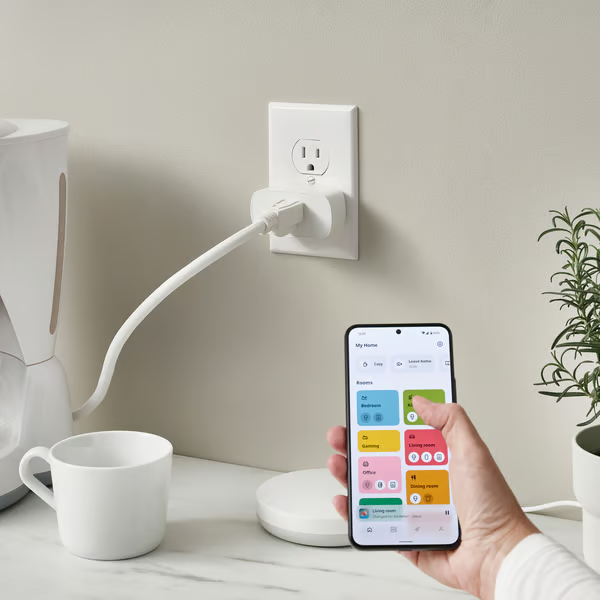
Integrating Smart Plugs with Your Nest Ecosystem
While Google Nest is renowned for its thermostats, cameras, and smart displays, it primarily functions as a central hub for a vast array of compatible smart home devices, rather than offering its own “Nest smart plug.” The true power lies in the integration. Many leading brands of smart plugs are designed to work flawlessly with the Google Home app and Google Assistant, making them de facto “Nest smart plugs” in functionality.
Brands like Kasa, TP-Link, Wemo, KMC, and Feit Electric are widely recognized for their robust compatibility. When you connect one of these smart plugs, you’re not just getting remote control; you’re gaining the ability to weave it into the fabric of your Nest ecosystem. Imagine using your Nest Hub to view your security camera while simultaneously telling Google Assistant to turn on the lamp connected to a smart plug in the living room. This cohesive experience is what truly defines a smart home. Many smart plugs also offer advanced features like energy monitoring, allowing you to track power consumption directly from your smartphone, a feature particularly appealing to eco-conscious Nest users.
How Smart Plugs Work and What You Need to Get Started
Smart plugs operate by receiving commands over your home’s Wi-Fi network. Most models utilize the 2.4GHz Wi-Fi band, which offers a broader range and better penetration through walls than the 5GHz band, making them ideal for devices scattered around your home. Newer smart plugs are also beginning to adopt the Matter protocol, an emerging standard that enhances interoperability between different smart home brands and ecosystems, further future-proofing your setup.
To embark on your “Nest smart plug” journey, you’ll need a few essentials:
- A Wi-Fi Network: A stable 2.4GHz Wi-Fi connection is crucial for the smart plug to communicate.
- A Compatible Smart Plug: Choose a plug that explicitly states “Works with Google Home” or “Google Assistant compatible.”
- The Google Home App: This free app, available on Android and iOS, is your central control panel for all Nest and compatible smart devices.
- A Google Nest Device (Optional but Recommended): While you can control plugs with your smartphone, a Nest speaker (like a Nest Mini) or display (like a Nest Hub) provides convenient voice control.
The beauty of this setup is its simplicity. You don’t need a separate bridge or hub for most Wi-Fi smart plugs, as your existing Wi-Fi router and Google Nest device (if you have one) act as the command center.
Guide to Installing and Using Smart Plugs with Nest/Google Home
Integrating a smart plug into your Nest-powered smart home is surprisingly straightforward. Here’s a general guide:
- Plug in Your Smart Plug: Insert the smart plug into any standard wall outlet. An indicator light will typically flash, signifying it’s ready for pairing.
- Download the Manufacturer’s App (if required): For many plugs (like Kasa or Smart Life), you’ll first download their dedicated app. Follow the in-app instructions to connect the smart plug to your 2.4GHz Wi-Fi network. This usually involves creating an account and allowing the app to discover the plug.
- Link to Google Home:
- Open the Google Home app.
- Tap the
+icon in the top left corner. - Select “Set up device” > “Works with Google.”
- Search for the smart plug’s brand (e.g., “Kasa” or “Smart Life”) and follow the prompts to link your account.
- Once linked, the smart plug will appear in your Google Home app.
- Utilize “Seamless Setup” (for select plugs): Some smart plugs, such as specific Kasa models (e.g., HS105 v6.0 and above), offer a “Seamless Setup” directly within the Google Home app. Simply plug in the smart plug near a Google Nest device and use the Google Home app to scan a QR code on the plug. This bypasses the need for an additional manufacturer app for initial setup, streamlining the process significantly.
- Assign to a Room and Rename: In the Google Home app, assign your new smart plug to a specific room (e.g., “Living Room”). Then, give it a simple, memorable name like “Living Room Lamp” or “Fan” for easy voice control. Avoid complex names that Google Assistant might struggle to understand.
Once configured, you can use your Google Home app to manually toggle the plug, or simply say, “Hey Google, turn on the Living Room Lamp.”
Tips and Tricks to Maximize Nest Smart Plug Utility
Getting the most out of your “Nest smart plug” involves more than just turning things on and off. Here are some pro tips:
- Create Routines: Leverage Google Home Routines to automate multiple actions with a single command or schedule. For example, a “Good Morning” routine could turn on your bedside lamp (via a smart plug), start your coffee maker (via another smart plug), and play your favorite news podcast on your Nest speaker.
- Set Schedules: Automate daily tasks. Program a smart plug connected to a lamp to turn on at sunset and off at bedtime, ensuring your home always feels welcoming and lived-in.
- Group Devices: If you have multiple lamps in one room, group them in the Google Home app. Then, you can control all of them with a single voice command like, “Hey Google, turn on Living Room Lights.”
- Monitor Energy (if available): If your smart plug includes energy monitoring, use its companion app to track power consumption. This data can help you identify energy hogs and make informed decisions to reduce your electricity bill.
- Vacation Mode: Connect lamps to smart plugs and use routines to randomly turn them on and off when you’re away, creating the illusion that someone is home and deterring potential intruders.
Dr. Evelyn Reed, a renowned Smart Home Futurist, notes, “The real genius of smart plugs in a Nest ecosystem isn’t just remote control, but the symphony of automation they enable. It’s about crafting an environment that anticipates your needs, subtly enhancing your daily life.”
Benefits of Smart Plugs in Your Nest Home: Energy Saving, Safety, and Convenience
Integrating smart plugs into your Google Nest home brings a trifecta of significant advantages:
Energy Saving
One of the most compelling benefits is energy efficiency. How many times have you left a light on or forgotten to unplug a charger? With smart plugs, you can remotely turn off devices that are needlessly consuming “vampire power” or simply left on by accident. Scheduling lights or fans to operate only when needed, or even monitoring real-time energy consumption with specific models, empowers you to make smarter choices that translate into tangible savings on your utility bills. This aligns perfectly with Nest’s core focus on energy management, especially through devices like the Nest Thermostat.
Safety
Smart plugs can significantly boost your home’s safety and security. By integrating them into your Nest ecosystem, you can:
- Simulate Occupancy: As mentioned, randomizing light schedules while you’re away can deter burglars.
- Prevent Overheating: Remotely turn off appliances like curling irons or space heaters if you suddenly remember leaving them on.
- Child Safety: Control outlets in children’s rooms, ensuring certain devices are only active when appropriate.
- Hazardous Appliance Control: For devices that shouldn’t be left unattended, a smart plug provides an easy shut-off mechanism.
Convenience
Perhaps the most immediate and appreciated benefit is sheer convenience.
- Voice Control: “Hey Google, turn on the bedside lamp” is far easier than fumbling for a switch in the dark.
- Remote Management: Control any plugged-in device from anywhere in the world using your Google Home app. Forgot to turn off the fan before leaving for vacation? No problem.
- Automation: Create a seamless living experience where devices respond to your presence, the time of day, or other smart home triggers. Waking up to a freshly brewed cup of coffee, thanks to a scheduled smart plug, can transform your mornings.
Advanced Features and Smart Home Ecosystem Integration
The world of smart plugs is continuously evolving, offering more than just basic on/off functionality. For those deeply embedded in the Nest/Google Home ecosystem, advanced features can unlock even greater potential.
- Matter Protocol: The adoption of Matter is a game-changer. Smart plugs supporting Matter can communicate directly with your Google Home hub (like a Nest Hub or Nest Wifi Pro) and other Matter-enabled devices, regardless of brand. This offers greater local control, meaning your automations can still run even if your internet connection is temporarily down, and simplifies setup and integration across diverse smart home product lines.
- IFTTT Integration: Many smart plugs can be integrated with IFTTT (If This Then That) recipes. This platform allows for highly customized automations that go beyond what native apps offer. For instance, you could set up an IFTTT applet to turn on a lamp via your smart plug when your Nest camera detects motion at night.
- Device Grouping and Scenes: Beyond simple room assignments, Google Home allows for more intricate grouping and the creation of “scenes.” A “Movie Night” scene could dim the lights, turn on your smart TV (if plugged into a smart plug), and activate your soundbar with a single voice command.
These advanced capabilities ensure that your smart plugs aren’t just isolated gadgets but integral components contributing to a truly intelligent, responsive, and personalized smart home experience.
Conclusion
The journey to a smarter home often begins with the humble plug, and for those within the Google Nest ecosystem, the “nest smart plug” represents a powerful gateway to enhanced automation, efficiency, and comfort. While Google may not brand its own smart plugs, the vast landscape of compatible third-party devices ensures that you can effortlessly integrate, control, and optimize almost any appliance in your home. From saving energy and bolstering security to simply enjoying the convenience of voice control, smart plugs are an indispensable tool for maximizing your smart home’s potential. So, take the leap, explore the possibilities, and experience how these intelligent connectors can truly transform your living space.